What a CMMS Can Do Inside an ATEX Zone


A technician walks past an ATEX-rated pump on her morning round. She notes a slow drip at the seal, takes three readings off the analogue gauges, and writes them on a clipboard. Her phone is in a locker by the airlock. Two hours later, back at a desktop, she transcribes the readings, opens a work order, and tries to remember what the seal actually looked like.
The data isn't wrong. It's just late, partial, and disconnected from the asset record.
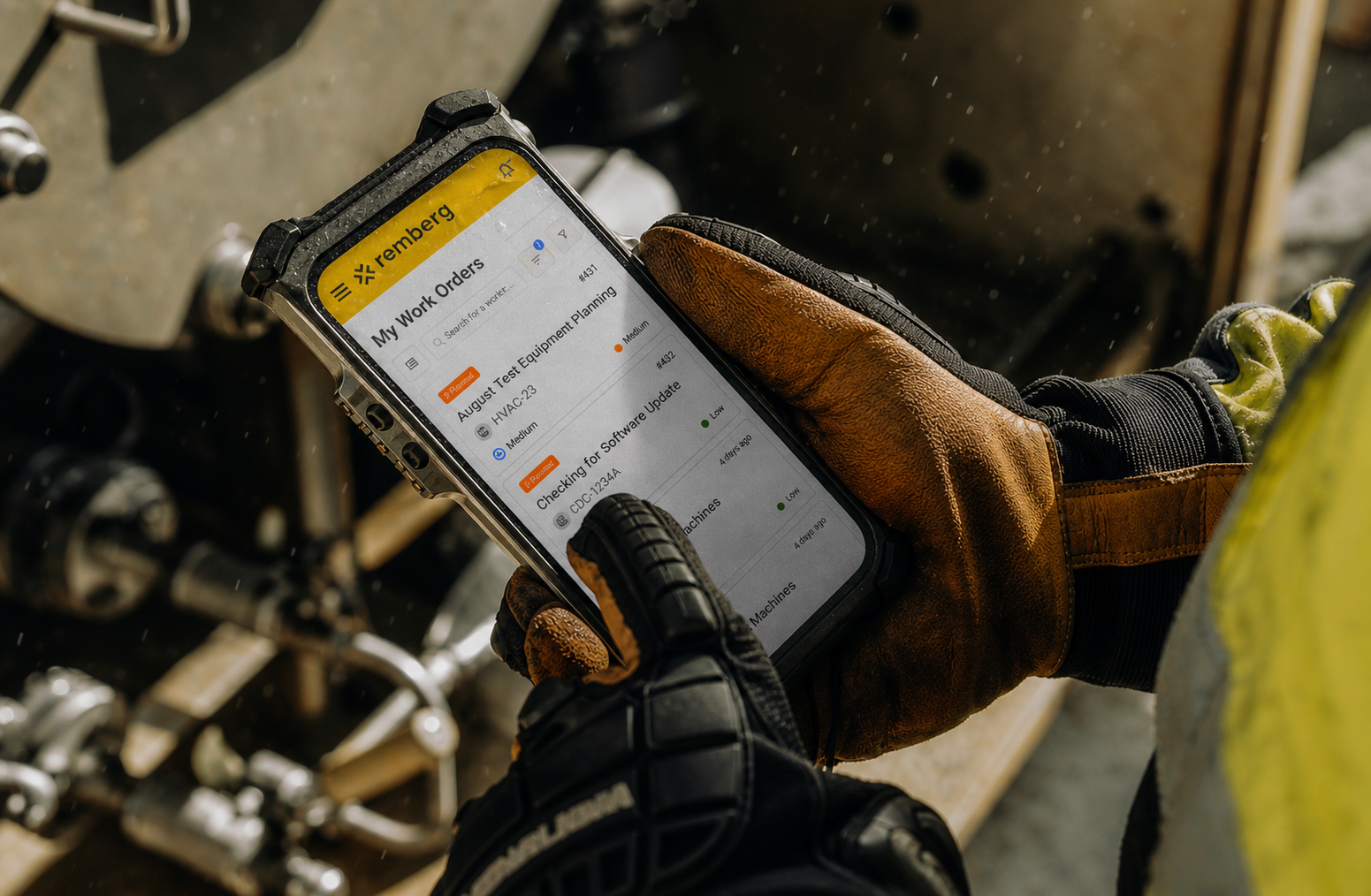
For decades, that gap has been the operational reality of maintenance work in hazardous areas. Our partners at xShielder make the case for why Ex-certified mobile devices matter. What changes at the asset, once one of those devices is in someone's hand?
The short answer
Inside an ATEX zone, a modern CMMS running on an Ex-certified smartphone lets a technician pull asset history, run an inspection procedure, scan a QR or RFID tag, capture photos and measurements, and close a digital permit, without leaving the zone or transcribing anything later.
What's broken today
Talk to enough Heads of Maintenance in process plants and the same line keeps coming back. One maintenance project lead once put it like this:
"The problem with these devices, when they're so heavily encapsulated, is they're a) extremely expensive and b) you often have devices that are already 6 or 7 years out of date."
That's the hardware reality in most Zone 1 and Zone 2 environments today. The Ex-certified handheld in the cabinet was certified six or seven years ago. It runs an Android version no modern CMMS app will install on. So the team either fills out a stripped-down form that misses half the point, or skips the device entirely and goes back to paper.
Then a second pattern shows up, this time generational. We've heard it phrased this way:
"In ATEX zones, mobile devices were historically banned. That creates a normality gap for younger workers."
Younger technicians arrive on the shop floor having spent fifteen years with smartphones in their pockets. The Ex-zone, where their phones are forbidden, is the strangest part of their working day. The work itself is fine. The tools they're given to do it feel like they belong to a different decade.
The cost is operational. Data arrives hours late, written twice, often incomplete. The asset record on the CMMS lags reality by a shift, and that lag is where reliability problems hide.
What changes when both pieces show up
Once an Ex-certified smartphone is paired with a modern CMMS, five things become possible at the asset itself.
A technician can pull the asset's full history before opening the cover, including last service date, recent findings, and any open work orders. She can run an inspection procedure with pass, flag, and fail check items, photo capture, and measurement entry. She can scan a QR or RFID tag to surface attached documents, parts info, and digital twins. She can log a finding with photos in the moment, not from memory four hours later. And she can close a digital permit-to-work without walking back to the office.
None of those steps require new behaviour. They're the same maintenance tasks teams have always done. They just stop ending in a transcription queue.
The compliance dividend
ATEX classification works hardest when it isn't a free-text note. When ATEX status sits on the asset record as a structured attribute, it can pull the right inspection checklists, route the right approver, and produce an audit trail that a TÜV inspector can actually read. EU Directive 2014/34/EU sets the legal frame. The CMMS is what turns the frame into a daily workflow.
The point isn't that compliance becomes automatic. It's that compliance stops being a separate workstream from maintenance. They're the same record.
The cultural shift no one quite mentions
The ATEX hardware story is also a workforce story. The technicians joining maintenance teams today don't draw a line between "the work" and "the tools the work runs on". They expect both to be modern. When the zone forces them to put their device in a locker and pick up a six-year-old handheld, what they hear isn't "safety first". It's "this part of your job is stuck."
Closing the hardware gap closes that perception gap too. Quietly, and without anyone needing to say so.
An honest caveat
Hardware doesn't fix process gaps. A CMMS is only as useful as the asset hierarchy, classification logic, and inspection plans behind it. If the assets aren't tagged correctly, no device, certified or otherwise, will route a checklist to the right person. The work in front of any maintenance team adopting both pieces is real, and it's mostly a data-discipline job.
That said, when the work is done, the payoff compounds. remberg customers like Liqui Moly have reported a 20% increase in plant availability after digitising their maintenance workflows. The same pattern shows up in plants with hazardous areas, just later, because the hardware has held them back.
That's what changes now.
Want to see how a modern CMMS handles ATEX-classified assets? Our partners at xShielder supply the Ex-certified hardware that closes the field-device gap. Book a remberg demo to see what the workflow looks like at the asset, in the zone.
Frequently asked questions
Can you use a regular smartphone in an ATEX zone? No. Consumer devices aren't certified for explosive atmospheres. Only equipment certified under ATEX Directive 2014/34/EU, or an equivalent like IECEx, can be brought into Zone 0/1/2 (gas) or Zone 20/21/22 (dust).
What does an Ex-certified iPhone change for maintenance teams? It removes the hardware barrier that forced technicians to use paper or stripped-down handhelds in the zone. A full mobile CMMS now runs at the asset, with the same interface the team uses everywhere else.
How does a CMMS handle ATEX-classified assets? ATEX status lives as a structured attribute on the asset record, which can trigger mandatory inspection checklists, restrict approvers, and produce a regulator-ready audit trail.
What does the workflow inside the zone actually look like? Tap an asset's QR or RFID tag, pull its history, run an inspection procedure, capture photos and measurements, log findings, and close a digital permit. All on the device, in the zone, in the same session.
Does remberg work on Ex-certified devices? Yes. remberg's mobile app runs on iOS and Android, including Ex-certified handsets like xShielder's Ex iPhones.