Edeka Rhein-Ruhr
How Edeka Rhein-Ruhr took control of 4,000 IT assets
- Company Edeka Rhein-Ruhr
- Industry Food logistics
- Sites 6 warehouse sites in North Rhine-Westphalia
Edeka Rhein-Ruhr's four-person team used to track around 4,000 assets in one shared Excel file. After moving to remberg, they were working productively across all six warehouse sites in under six weeks.
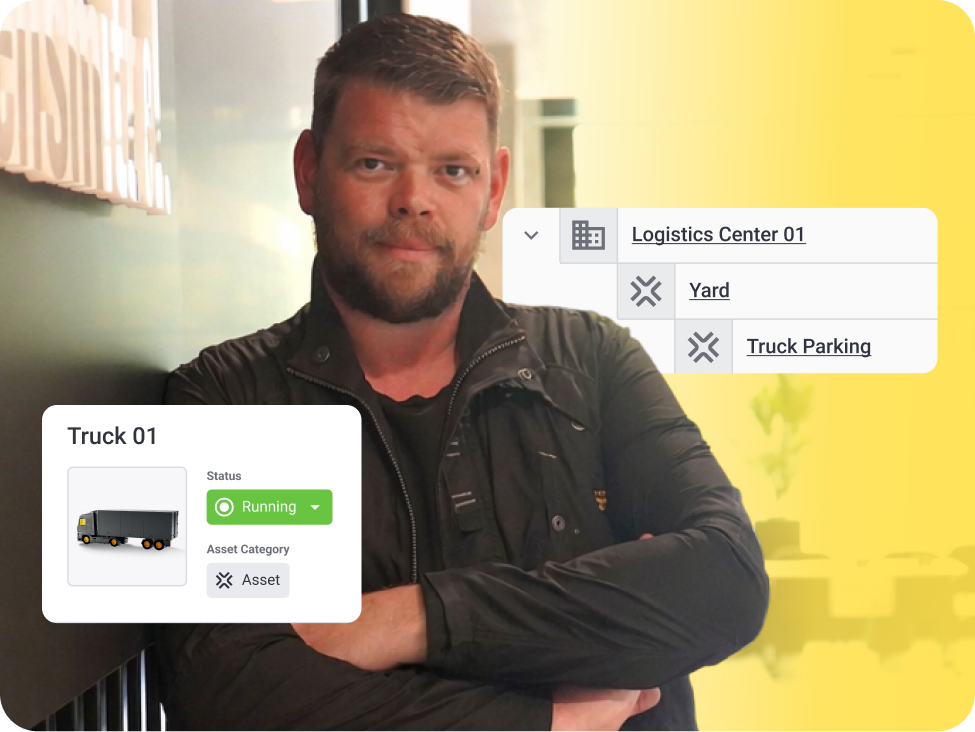
Denis Kleinhaus heads Central Hardware Support for Logistics at Edeka Rhein-Ruhr, one of the largest regional Edeka companies in Germany. The business runs six warehouse sites in North Rhine-Westphalia: three food logistics centres and three returnable beverage logistics centres, which supply hundreds of stores across the region. Denis Kleinhaus and his team of four are responsible for maintaining around 4,000 assets, from forklift systems and handheld scanners through to label printers. The pain didn't start with a big bang. It started with small Post-it notes.
The starting point: one team, one Excel file, too many people working in it
Anyone who has tried to edit the same spreadsheet as several colleagues at once knows how it ends. The file is locked. You wait. Or you jot something down on a slip of paper and hope you'll type it in later. "When two people from different sites wanted to open this monster of a spreadsheet at the same time, you hit a wall pretty quickly. A little Post-it note ended up next to the monitor, and what was on it didn't always make it back into the file," Kleinhaus recalls.
The real issue wasn't just concurrent editing, though. There was no end-to-end view of a device's lifecycle. When did it arrive? How many times had it already been in for repair? Is another repair still economically sensible, or would replacement be the smarter call? Excel could barely answer any of that in a systematic way.
Buying a mature solution rather than build one
The call was made internally, and it was made before the system collapsed. No competitor had set the example, no outage had forced the issue. That may sound like a small detail, but in practice it isn't standard at all.
An in-house build was even on the table briefly. That idea was dropped quickly. Denis Kleinhaus puts it plainly: "If I sit down with two developers and tell them what I want, what I get probably won't be what I'd get if I just bought a mature solution." So market research began. There was one pivotal moment along the way. Denis Kleinhaus had started out looking for a better way to manage 4,000 devices digitally. But pure asset management tools hit their limits the moment you looked at maintenance processes or spare parts. What he needed was a solution that didn't just map inventory but actually improved maintenance and lifecycle management for the Edeka assets.
What made the selection trickier still: Edeka Rhein-Ruhr is classified as critical infrastructure (KRITIS) as part of the food sector. That means stricter IT security requirements under the BSI Act, reporting duties to BSI and BBK, and the added demands of the KRITIS umbrella law. As Kleinhaus describes it: "Because we're a KRITIS company, there were quite a few technical hurdles, particularly around data protection and information security." Before anyone could work productively, IT security and data protection had to give the green light: evidence on the data centre setup, adjustments to standard contracts, several rounds of alignment with internal stakeholders. remberg went through all of those rounds. Anyone buying in a similar environment knows how often procurement falls over at exactly this point.
remberg offered more than just compliance. Many providers cover classic asset management, meaning inventory and device administration. remberg could cover the full maintenance and repair process: maintenance plans, spare parts management, and clear cost allocation at site level.
Live in less than six weeks
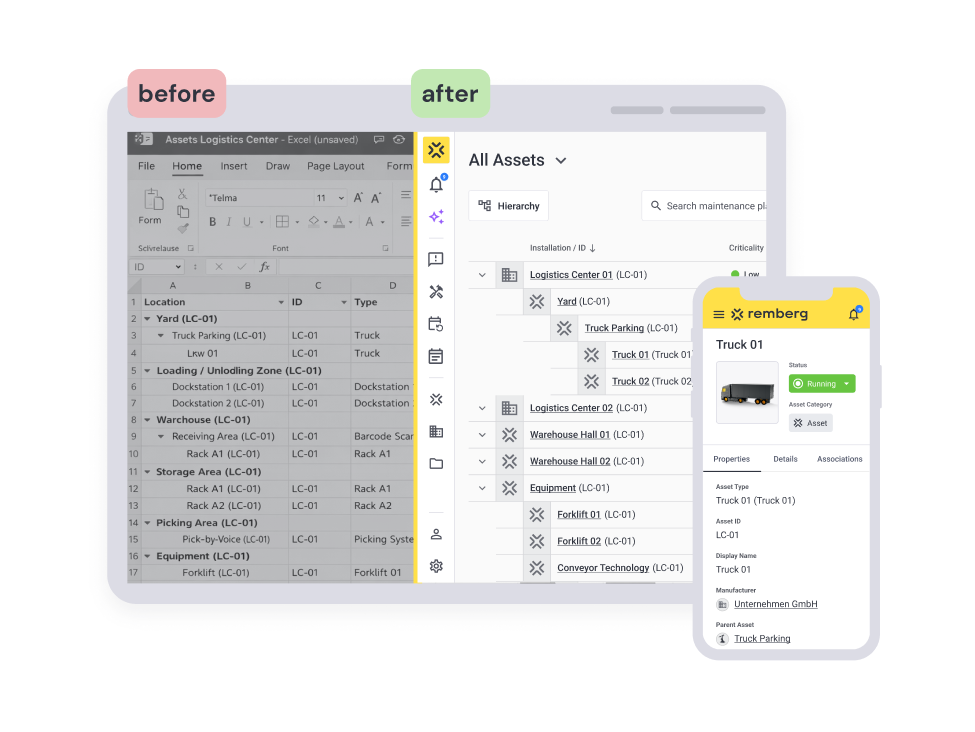
It took less than six weeks until every team member was working productively in remberg and inventory was kept there and nowhere else. The foundation was a clean data base. The team had already maintained a master spreadsheet, and that master data was transferred into the implementation template together with the remberg Customer Success Manager. The team worked out the rest on their own. Which data fields do we need? What will we add later? Denis Kleinhaus sums it up: "We were definitely up for it. We sat down and worked out what we wanted to do with it. That paid off." There were no big training workshops. When something new was added, there was a quick update across the team. Operations carried on without a hitch in the meantime.
What changed: concrete results in day-to-day work
Since the switch to remberg, the team's way of working has changed from the ground up. Four areas stand out.
1. Maintenance: from planning through to the report
Technicians get their maintenance tasks assigned automatically, once a month. Previously the initiative came from the site itself, often only when things were already urgent. Today maintenance is scheduled systematically, and assets like label printers in all six warehouses now run with demonstrably higher availability than before.
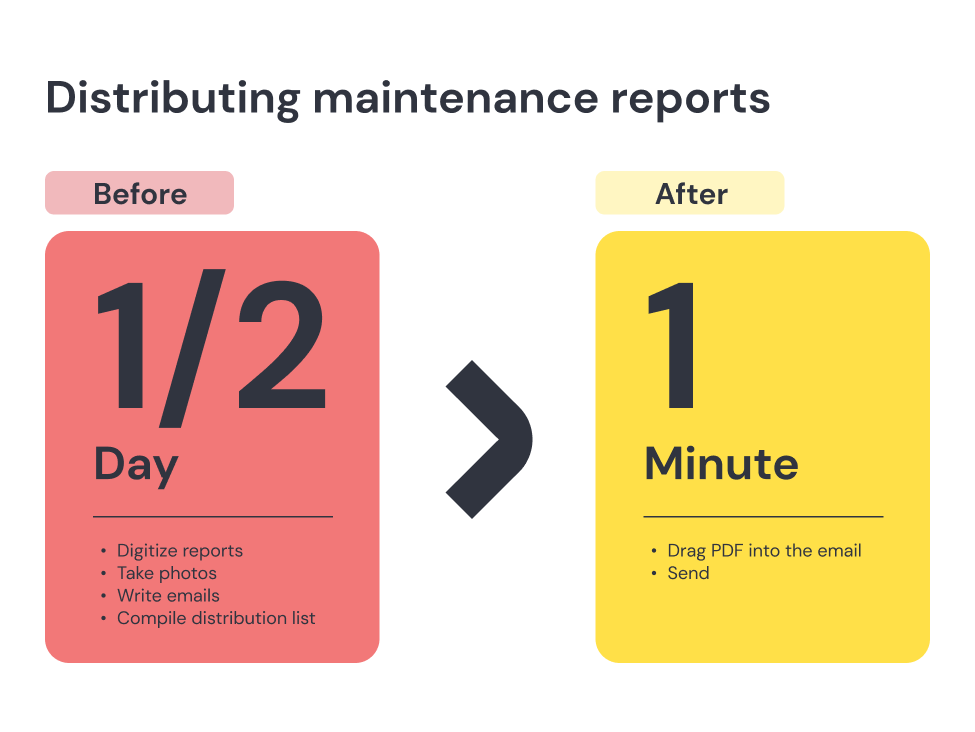
What came afterwards, the documentation and feedback to the site, used to be as much work as the planning itself. Denis Kleinhaus: "On the admin side alone, you used to burn half a day on that. Digitising the maintenance reports, taking photos if you're unlucky, writing the emails, looking up the distribution lists. Half a day, just to distribute the individual reports. Today I drag the PDF into the email and send it. Effort? One minute."
2. Adoption from day one
Excel works as long as one person uses it every day and is comfortable with cross-references and formulas. The moment the team grows, every change becomes a risk. Denis Kleinhaus knows it from experience: "If I've got a colleague who isn't that at home in it, I first have to get them to the point where they understand what the formula in that cell actually does. And that you can't just click in there and start typing." With remberg that overhead is gone entirely. The team enters what they see. No hidden references, no formula someone can accidentally break.
3. Spare parts stock at a glance
Six sites, different stock levels, no shared overview. What used to mean a technician reordering spare parts that a colleague at the next site still had on the shelf is a thing of the past. All stock is visible across sites, double orders can be avoided. Because spare parts are booked directly against work orders, Denis Kleinhaus knows exactly which site is generating which costs. The cost transparency that used to be pieced together painfully now appears automatically.
4. Full asset history at the push of a button
If you want to know what's happened to a particular device, today all you need is the serial number. The AI copilot pulls every piece of relevant information together. Denis Kleinhaus describes the new, AI-assisted day-to-day this way: "I just tell the remberg AI, 'Here's a serial number, find me everything from the invoice through the delivery note to the latest repair results.'" What used to mean a manual search across several systems is now a single query.
Looking ahead: growth with a system
What Denis Kleinhaus and his team have built across six sites and 4,000 assets is a foundation that scales. Further sites are due to be connected in the near future. The processes the team has built inside remberg, maintenance planning, spare parts supply, cost transparency, can be transferred directly. The groundwork is done. "remberg has moved us significantly forward when it comes to asset management," Kleinhaus concludes.