Glindemann Group
How Glindemann Group went digital across its gravel and recycling sites
- Company Glindemann Group
- Industry Gravel & recycling
- Sites Schleswig-Holstein, Germany
From word of mouth to an app. How a five-person maintenance team digitised its work across Schleswig-Holstein, in the north of Germany.
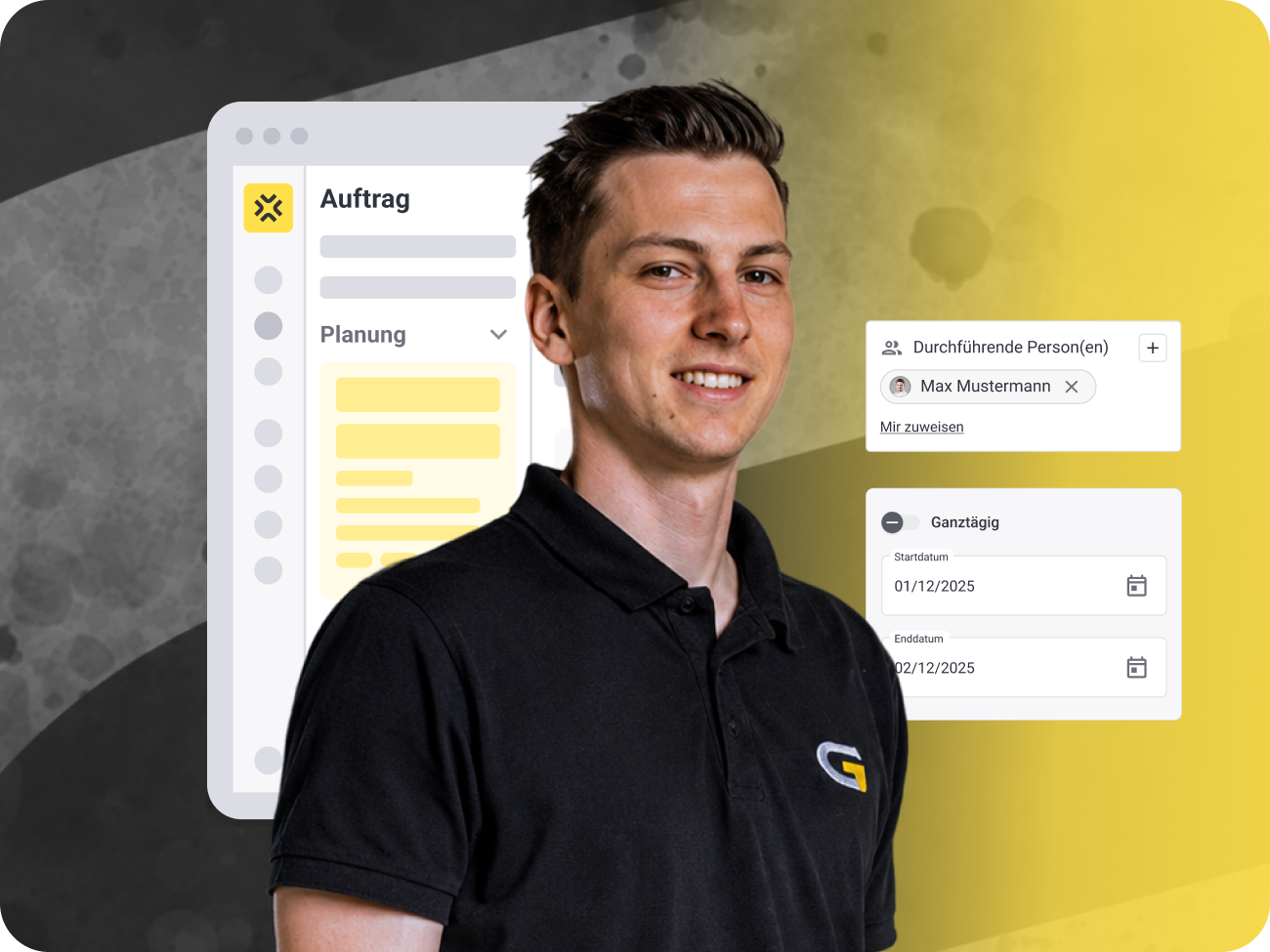
Florian Maiwald leads strategic purchasing and digitalisation at the Glindemann Group. Whenever the company needs to pick a new piece of software, roll it out or fix it, he is the person who gets the call. He sits between the departments and the tools, turning what people need into something the team will actually use day to day. For years, maintenance at the gravel and recycling sites had nothing like that. It had a whiteboard, one person who kept everything in his head, and a lot of faith that he would remember it all.
From word of mouth to real risk
The Glindemann Group runs 10 sites across Schleswig-Holstein: several gravel plants and recycling centres, plus a container service and a vehicle fleet. The team looks after all of it, from washing plants and mobile machines to attachments and even ladders. Everything that needs checking falls to a five-person maintenance team. And for years, that team ran on one man’s memory rather than any system.
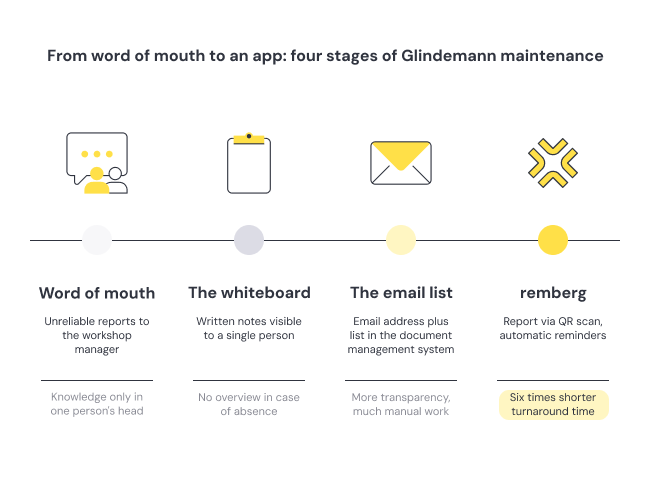
“We come from a time when people just called things across to whoever was running the workshop,” says Florian Maiwald. “‘Machine XY needs maintenance.’ Maybe he wrote it down, maybe he didn’t. Maybe he kept it in his head, maybe he didn’t. And at some point the job got done, more or less.”
His successor tried a whiteboard. Not the Microsoft kind, an actual board on the wall that you write on with a pen. The catch: when he wasn’t in, nobody else could see what was due. “When a machine got damaged because the maintenance had been skipped, the answer was always the same: ‘But he knows about it.’ That still wasn’t good enough.”
Next they tried a shared email address and a list in the document management system. That stopped a few things slipping through, but it was still messy. When the workshop lead wanted to add photos and machine details and suggested running the whole thing in Excel, Florian Maiwald drew the line. “We told him, that’s daft, Excel isn’t built for this. But we want to back you, so let’s go and find you proper software.”
On top of that came outside pressure over the UVV inspections, the safety checks German operators have to carry out by law. The checks had always been done and logged. The trouble came when someone asked to see the records, because pulling them together took time. “We did get asked how things stood with the UVV inspections,” says Florian Maiwald. “They matter for our certification, and we have to be able to show them.”
Easy to use, super functional, and very efficient.
“Excel? Daft.” The turning point
Florian Maiwald found remberg quickly. What mattered to him was that it did more than schedule maintenance. It also had to capture Work Requests from the team on the ground and fit into the fitters’ daily routine.
One plant as the test lab
Rather than switching everything on at once, the Glindemann Group rolled it out in stages. Florian Maiwald turned down the import template he was offered and built the basic structure in remberg himself. “I did almost all of it myself. I find I understand a system better when I’ve set it up from scratch.”
Plant 12 went first, because it had the most tech-savvy plant manager. From there, the team worked through it plant by plant. The whole rollout took two to three months, mainly because they took their time on purpose. “We could have gone faster. But we started with one pilot plant and used it to find our feet.”
The team never booked a single remberg training session. Florian Maiwald walked the power users through it first, then the wider group, all in person. “They came back maybe twice with questions, and after that, nothing.”
The real shift came from QR codes. Florian Maiwald bought weatherproof labels, printed the remberg QR codes and stuck one on every machine, right under the UVV sticker. Now a single scan is all it takes, and anyone, including stand-ins who don’t have their own account, can raise a Work Request. “At first the team was wary. Going through the app felt like too much hassle. The QR code changed that overnight. Now everyone’s happy with it, and they took to it straight away.”
What’s different today
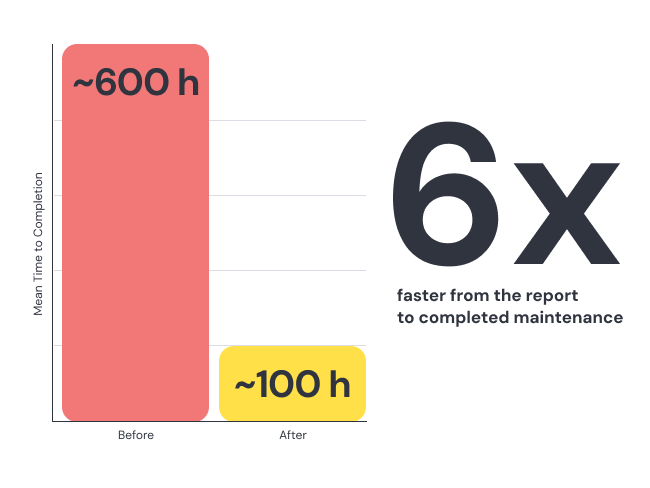
Lead time cut to a sixth. The headline number lives in the remberg dashboard. Lead time, the average gap between a Work Request coming in and the maintenance being signed off, has dropped sharply. “We’re six times faster at clearing the work now,” says Florian Maiwald. The speed-up comes from lots of small steps that each used to cost time. Work Requests are logged at the machine by QR code instead of by a shout across the yard or an email. The workshop lead sees every new request in the same system he plans in, and can turn it straight into a Work Order. Whoever raised it can check the status without chasing anyone. Add it up, and the pile of open jobs is far smaller than it was.
No more email workaround. What used to land in a makeshift inbox and get copied over by hand into the document management system now runs entirely in remberg. “I don’t get emails about this any more. It all comes through remberg. That was a big one for me.”
UVV inspections on demand. The inspections were always done and logged, but now it’s all there digitally, ready when you need it. When someone outside asks where the UVV checks stand, the answer comes straight from the system.
From reactive to proactive. Maintenance used to depend on someone remembering to check a list. Now the reminders come from the system itself. “Without a reminder, you had to go and look for yourself, and if you didn’t look, you had no idea anything was due. remberg makes that much easier.”
A clear weekly rhythm. Every Tuesday, the team runs through all the open Work Requests in one go. In the same meeting, Florian Maiwald gets the purchasing update and can chase suppliers. The workshop lead approves requests, schedules Work Orders and hands them to the fitters. Florian Maiwald only steps in now to set up new users or deal with the odd admin job.
Shorter waits where it counts. Anything the Glindemann Group controls itself now moves noticeably faster. “We’ve got far less downtime and less waiting wherever it’s in our hands. When we depend on outside firms, there’s nothing we can do. But the waiting that was on us, we’ve cut that right down.”
The team itself warmed to it faster than expected, too. “The response has been nothing but positive. The fitters, the ones who actually have to use it, took a little longer to settle in, but not much. After a week they were all happy with it.”
When something’s not right, it gets fixed
Ask Florian Maiwald what remberg could do better and he struggles to come up with much. Early on there were a couple of niggles with photos in the mobile app and a few setup details. “Anything I’ve ever had to moan about, I’ve reported, and you’ve built it,” he says. “I really can’t complain.” What stayed with him was how fast the answers came. “Right at the start, while we were setting up, I had two or three questions and suggestions. I got an answer quickly, and you built some of it. Where you didn’t, you had a workaround we could use. You’re so flexible, and for us that’s worth its weight in gold.”
The next step: the asset record
Work Requests and Work Orders are running smoothly. Next, the Glindemann Group wants to get more out of the asset record: photos, parts information and asset history, all kept up to date in remberg. Some of that happens already, in passing. The plan is to make it routine. The asset hierarchy is already mapped, from the plant down through the switchgear and the mobile machine to a single component on the big wash tower. That gives the plant managers a clear view too, so when they bring in outside contractors they can point to the exact part instead of just reporting that “something’s broken”.
Florian’s recommendation
Ask him what he’d tell another gravel or recycling firm still running on word of mouth and a whiteboard, and Florian Maiwald doesn’t hesitate. “Bring it in, definitely. It’s good fun to work with.” And remberg in a single line? “Easy to use, does everything we need, and very efficient.”