Schwan Cosmetics
Schwan Cosmetics cuts audit evidence checks from 180 to around 70 minutes
Maintenance records used to live in logbooks at the machines, in binders and on SharePoint. Today the maintenance team finds them in remberg, right at the asset and in the linked maintenance plan.
Company: Schwan Cosmetics International
Industry: Colour cosmetics
Site: Heroldsberg near Nuremberg, Germany


Challenge
- Maintenance and inspection records spread across logbooks, binders and SharePoint
- Audit evidence had to be gathered from several places
- No quick overview of which maintenance was still open

Outcome
- 3,300 assets in remberg with photo, QR code and maintenance plans
- Audit evidence check in around 70 instead of 180 minutes
- Around 30% less time on documentation and searching
- A second Group site now works with remberg
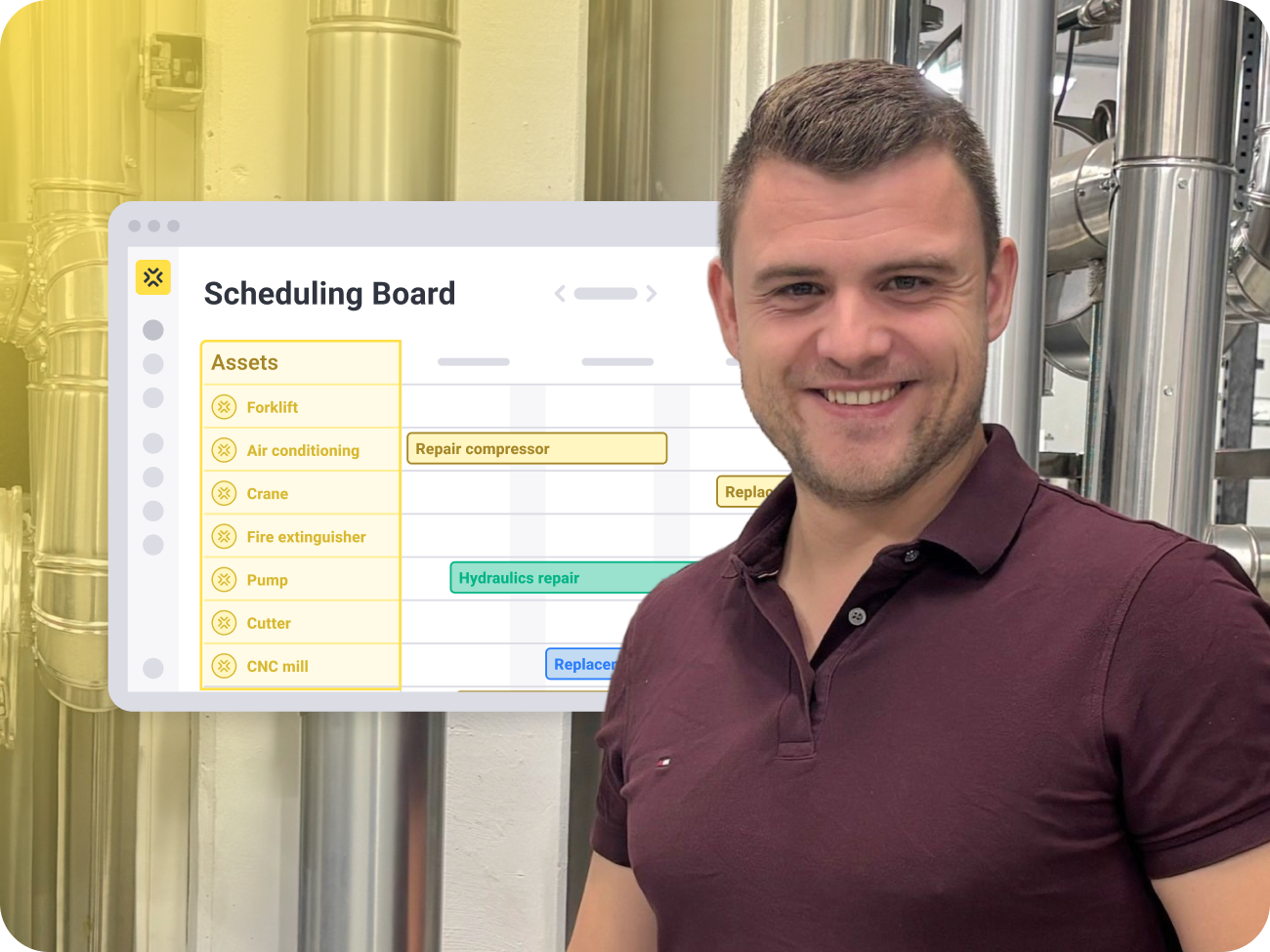
Maintenance records were spread across different places
Schwan Cosmetics is the cosmetics division of the Schwan-STABILO Group, best known in Germany for its STABILO writing instruments. At the Heroldsberg site, Maximilian Linz is in charge of maintenance. He and his team keep the utilities running that production depends on directly. If the compressed air supply fails, the production machines stop 15 seconds later. That is why the team has set itself a target of no more than one hour of self-inflicted production downtime per year.
Hygiene matters just as much. Schwan Cosmetics develops and manufactures colour cosmetics, including pencils that are applied around the eye. No contamination may reach production through steam, compressed air or water. A dedicated plant treats the water for water-based products. Its readings are logged every day, on top of the continuous recording in the building automation system.
For a long time, the related maintenance and inspection records were kept on paper. Logbooks for the daily inspections hung at the machines. Other documents sat in binders on site or on SharePoint. Whenever an audit came up, whether from a customer or another certification body, the maintenance team had to gather the required evidence from several places.
“Preparing for an audit used to involve a lot of coordination, because the relevant documents were partly kept in different places,” says Linz.

You open remberg and see straight away what is done, what is still open and which tasks need the highest priority.

An intuitive system that makes work easier
So Linz went looking for a suitable system. From facility management he knew solutions that store maintenance cycles and documents. A CAFM tool he looked at first turned out to be more than the maintenance team needed.
What mattered most to Linz was ease of use. Many of the technicians spend most of their day at the machines, not at a desk. Software that takes weeks to learn was out of the question. With the asset overview in remberg, the logic was clear to him straight away: “You look at it for half an hour and you understand how it is built.” From there, the team worked out most of the system on its own.
The people responsible built the foundation themselves
Before the rollout, Linz handed out remberg’s Excel templates to his team. Everyone responsible for a set of assets recorded their own equipment. The details were then transferred into the import lists. After one to two months, the lists were ready to import. The team then added photos, maintenance plans and the most important documents.
Having the asset owners capture their own data was a deliberate part of the approach. It got them thinking about the asset structure early on, and short presentations showed them how their work would change: scan the QR code on site, document on the tablet and close the work order right there, instead of walking through the plant with a notepad.
The move to remberg followed a clear structure. “I introduced the team to the system step by step. That was easier than handing them everything ready-made from day one,” Linz explains.
In practice, that means digitising one area first, testing it in daily operations, refining it and then connecting the next area. Two of the four maintenance areas already work in remberg day to day. The team is also trialling work requests in the system. That process will switch over completely once all four areas are connected.
Records and current information live right at the asset
Maintenance plans and daily checks: The maintenance plans for each asset are stored centrally in remberg. The readings taken each day are documented there per asset, together with a screenshot from the machine’s control system. That makes it clear at any time who worked on which asset and which values were recorded.
Documents and QR codes on the object. Every recorded object gets a photo and a QR code. On site, the technician scans the code and documents directly on the tablet. Maintenance documents, floor plans and other as-built records are stored in remberg too. Instead of searching across different systems, colleagues pull up the current version themselves.
Floor plans for stand-ins and new colleagues. Every asset is linked to its location on the building plan. Anyone covering for a colleague or new to the team can see where an asset is without someone walking them there. A fire damper, for example, can be found via the room or the ventilation system it belongs to.
Features in use: asset hierarchy, maintenance plans, work orders, floor plans, file storage and QR codes, with work requests being set up.
Key figures

70 instead of 180 minutes
Evidence check in the recertification audit, maintenance department, single audit

Records on the maintenance plan
Maintenance records linked directly to the asset and its maintenance plan

A second site
Another site of the Schwan-STABILO Group relies on remberg
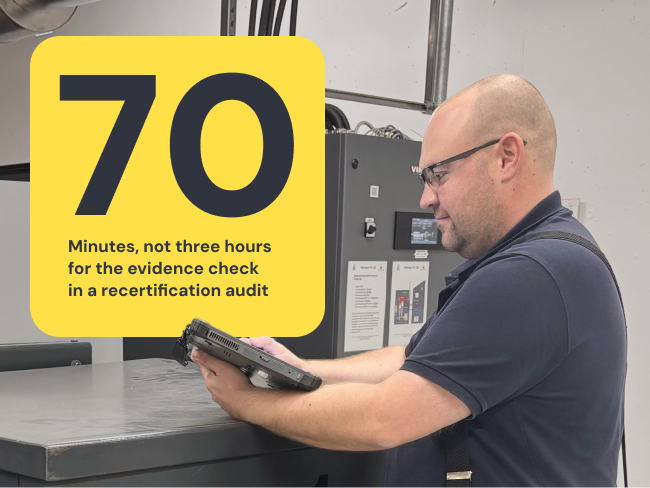
Maintenance stays in view and evidence is ready the moment an audit asks for it
Audit evidence check: around 70 minutes instead of three hours
During the recertification audit for environmental and energy management, the auditor asked for the wastewater monitoring records, among other things. Linz opened the maintenance plan and found both the required document and the discharge permit stored with it. The audit of his department was done in around 70 minutes, where it used to take around three hours.
Overdue maintenance is visible at a glance
For Linz, the biggest change shows in everyday work. As colleagues document their work in the system, he can see in a single view which routine maintenance is done and which is still open. Overdue tasks are marked in red. Even after a holiday, he no longer has to go through several documents to get an overview.
Linz especially values the central overview of all maintenance plans: “It creates transparency about upcoming work and helps make sure the relevant tasks are reliably taken care of.”
Around 30% less time on documentation and searching
By Linz’s estimate, maintenance now spends around 30% less time on documentation and looking for documents. The effort drops because records no longer have to be pieced together from logbooks, binders and various digital folders.
A second site now works with remberg too
Interest in the new approach is growing beyond maintenance. Production has already asked to store its maintenance documents in remberg as well. And a second site within the Group now works with the system.
Asked to sum up remberg in one sentence, Maximilian Linz answers: “I don’t need a sentence, just one word: Arbeitserleichterung. It simply makes work easier.”