Walter Gott
Cool under pressure: switching systems in peak season
Walter Gott now runs maintenance, breakdowns and contractor visits through remberg, giving its four-person technical team one shared view of every asset.
- Company Walter Gott Produktion
- Industry Food, frozen food trade and logistics
- Site Wuppertal, Germany


Challenge
- Breakdowns reported on paper, by phone or in person
- Faults sometimes couldn’t be traced by the time a technician arrived
- The team needed one shared view of assets, appointments and open tasks

Outcome
- All four technicians work from the same information in remberg
- About a week and a half to prepare asset data, then straight to work in remberg
- Breakdowns documented as work orders, with photos, at the asset
- Positive IFS audit feedback on the maintenance documentation

Better visibility for diagnosing faults
Walter Gott produces ice at its plant in Wuppertal. A four-person technical team looks after refrigeration systems and ice production, plus packaging machines, conveyor belts, material handling equipment, doors and gates. Master technician Tim Rode plans upcoming work, pitches in on the floor and coordinates outside contractors.
Breakdowns used to come in on paper, by phone or in person at the office. When a machine went down, someone from production would tell the team and a technician would head out. By the time they got there, the fault sometimes couldn’t be traced anymore, and an incomplete description made it harder to diagnose.
Language is another hurdle. Many machine operators speak little German, so describing a breakdown is often a team effort. “We try to translate the fault together with them using Google Translate so we can diagnose it better,” Rode says. That takes time at the machine, and it only helps if the fault is still visible.
Scheduled maintenance and contractor visits also had to stay on the radar. The in-house team can’t handle every job, so booking outside firms on time is part of Rode’s week. To do that well, the team needed one shared view of assets, appointments and open tasks.

Breakdowns used to reach us on handwritten notes, or someone would just call them out to us. Now we all see in remberg which tasks are still open and what’s been done at the asset.

Easy to use, sized to fit
When Tim Rode joined Walter Gott, the company was already using maintenance software. Within a few weeks, he knew the team needed a clearer tool for daily work. Management signed off on a search.
After comparing several options, the team took a closer look at remberg at the “maintenance” trade fair. What sealed the deal: ease of use and a licence model that matched current needs, with no big upfront investment. That let Walter Gott start in Wuppertal with its existing technical team. The upcoming IFS audit added pressure: the new system had to be live by then.
About a week and a half to get the asset data ready
Rode moved the asset list from the old system into a remberg Excel template. Much of the data could be carried over and rearranged, and he filled in the assets that were missing. About a week and a half later, the file was ready to import.
The team started working in remberg right after the upload. Rode walked his colleagues through the key workflows, and each technician then refined the asset structure for their own area. Anything that only became clear in daily operations was adjusted after go-live. The result: a structure built from real use, not designed in a vacuum.
“The Help Center works pretty well for that. You can figure out the software on your own,” Rode says.
The switch landed right in peak ice production season. Walter Gott went ahead anyway, because the audit was getting close.
One workflow for maintenance and breakdowns
Planning the week. At the start of each week, the team checks remberg for maintenance that’s due, work that’s already scheduled and tasks that are still open. That determines what the in-house technicians handle and where a contractor comes in. Upcoming appointments come from the system, so nobody has to keep them all in their head.
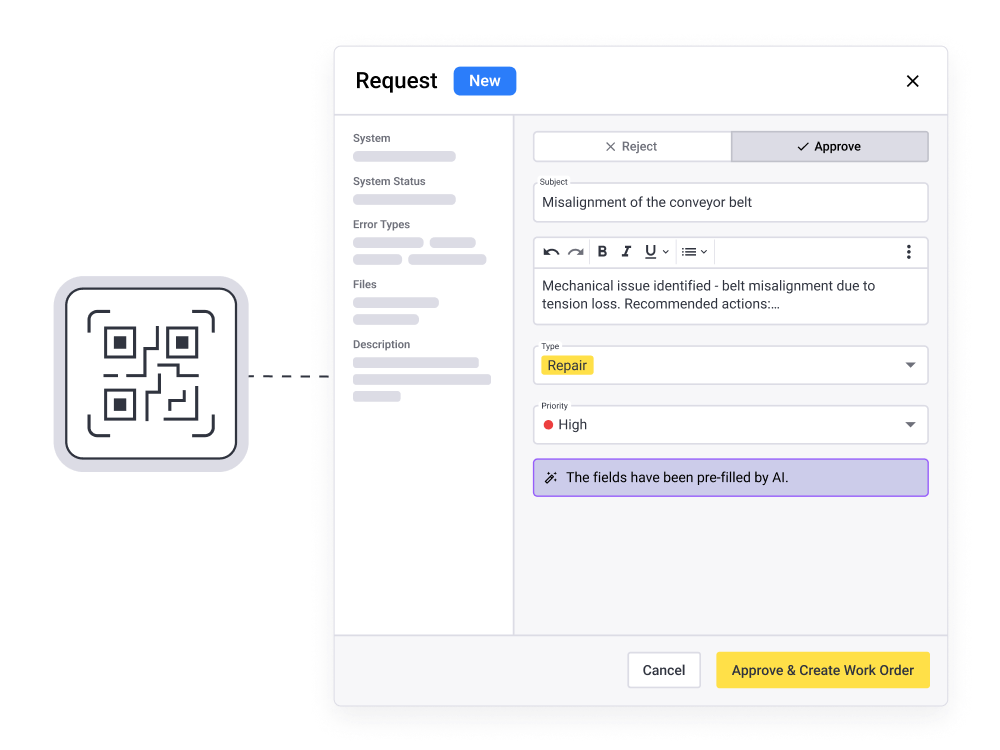
Documenting breakdowns. When an asset breaks down, the team creates a work order, adds photos and logs the work done. Each asset keeps a clear record of what happened and how the fault was handled.
Keeping everything at the asset. Open and completed tasks, breakdown records and asset history all live in one structure. All four technicians work in it and keep their own assets up to date.
Features in use: asset structure, maintenance planning, work orders, work requests and photo documentation at the asset.

Key figures

Successful switchover
during peak ice production season

About a week and a half
to prepare asset data from the old system before going live in remberg

Positive IFS audit feedback
on how clear and traceable the documentation is
Early results after just under two months
Four technicians, one source of truth
Handwritten notes and verbal requests now become documented work orders in remberg, where the team can see what’s planned, open or done. Photos capture what the asset looked like during the last breakdown. And because each technician keeps their own area up to date in the system, the latest status no longer depends on who took the original report.
Contractor planning runs off the same information. Upcoming maintenance tells Rode which outside specialists to book, and when. That way, remberg connects day-to-day task management with longer-range planning.
Positive feedback in the IFS audit
Just under two months after go-live, the team presented its maintenance documentation in the IFS audit. Walter Gott had digitised work instructions, linked documents to the relevant assets and attached photos to breakdowns. Instead of pulling binders, the team showed on screen what had been documented for any given asset.
“When we presented remberg and how we plan to use it going forward, the feedback was positive across the board. [The auditor] found the layout very clear,” Rode says. According to Rode, the auditor was particularly positive about how clearly the work orders were structured and that changes and additions were traceable.
Faults stay traceable, even after they disappear
An early test showed what digital reporting can do for diagnosis: a machine operator described a breakdown on a smartphone, and the technical team turned it into a work order. The fault was no longer visible by the time they arrived, but the original description was still there.
“We could analyse the fault much better, even though it was no longer visible,” Rode says. At that point, the process was still being tested with a single employee. Each documented breakdown stays linked to its asset, so if questions come up later about a specific production period, the team can see which breakdowns were reported on that asset.
Less than two months in, it’s too early to put a number on the time Walter Gott saves with remberg. But the change in how the team works is already clear: breakdown reports become documented work orders, the work is recorded at the asset, and planning runs off one shared set of information. The positive IFS feedback also shows that this structure matters not just day to day, but also when it’s time to provide evidence.
Asked what a good day looks like, Rode says: “If I have no open requests left in remberg and I’ve worked through the planned tasks, it’s been a successful day.”